4th century BC
Plato
- Idealism — forms over particulars
- The Republic ethic: “God is not the author of evil”

This song opens the album, and it has a particular job - it carries you straight out of Outside the Camp and into a praise record. The last album left a man alone in a cold field. This one throws a door open and starts calling people in. Come in, come in from the cold. There's room at the fire, there's room in the fold.
And notice immediately whose work the gathering is. We did not build this house, we did not light the flame. He threw the door open wide. That is the grammar the whole album will keep - the saving verbs belong to God, and the only thing a person does is come, and sit, and sing. Each verse walks in a different outsider: the one with no pew left, the one the camp branded and walked to the edge, the one who slipped out the back and stopped coming. The album is making sure no one in earshot can think the door is not for them.
The bridge widens it as far as it goes, on the strength of one promise from Christ Himself. Him that cometh, He will in no wise cast out - not the least, not the last, not the lost. And then the line that ties this record to the one before it: the camp shut its gate, but the Lord never has. The cold field of the last album turns out to be holy ground - this field is a church when His people sing here. The door is open, and He swore it stays open till every last sheep is found. Come in from the cold.
Everything that exists is a thought in the mind of God.
Try again.
I spent the majority of my adult life building something I didn't know had a name. It started with the Scriptures and a lot of late nights. It ended with one sentence that generates every theological position I hold, from the nature of God to the nature of heaven and hell, without contradiction. One sentence. Thirty chapters. Sixteen appendices. And if you accept the sentence, everything else follows.
Most systematic theologies start with a list of doctrines and work through them one by one. This book starts with an ontological claim - that everything that exists is a thought in the mind of God - and derives everything from that single proposition. This is not a rearrangement of existing theology. This is a paradigm shift. Since Augustine imported Plato's metaphysics into the church in the fourth century, every major system of Christian theology has been built on a foundation the Scriptures never laid. This book identifies that foundation, names it, traces its influence across sixteen centuries, and replaces it with an ontology derived from Scripture alone. If the claim holds, this is the most significant shift in the theological starting point since Augustine. And I believe it holds.
This is not a devotional. This is not a commentary. This is a systematic theology built from the ground up by a computer programmer with no seminary degree, no denominational backing, and no one's permission. It uses the vocabulary of information theory, computer science, and quantum physics to describe realities that traditional theological language has never been able to reach. If you are a scientist who suspects that information is fundamental to reality but can't bring yourself to call it God, this book speaks your language. If you are a sovereign grace believer looking for a system that follows the logic all the way, this book does that. And if you have been told that the sharpest doctrine produces the coldest heart, this book ends with the widest arms you have ever seen in a Reformed theology.
The digital edition is free. The truth doesn't come with a price tag. - Brandan Kraft
Imports both:
Fuses them with Scripture.
Aquinas · Calvin · Luther · Westminster
Gill · Clark · Berkhof · Grudem · Hoeksema
Every system in the comparison above stands on this foundation.
Stands on a different foundation: Scripture, on its own terms (John 1:1; Heb. 11:3; Col. 1:17; Isa. 45:7).
The architecture is idealism, because Scripture teaches it — mind precedes matter, the invisible is more real than the visible.
Rejects what Augustine inherited:
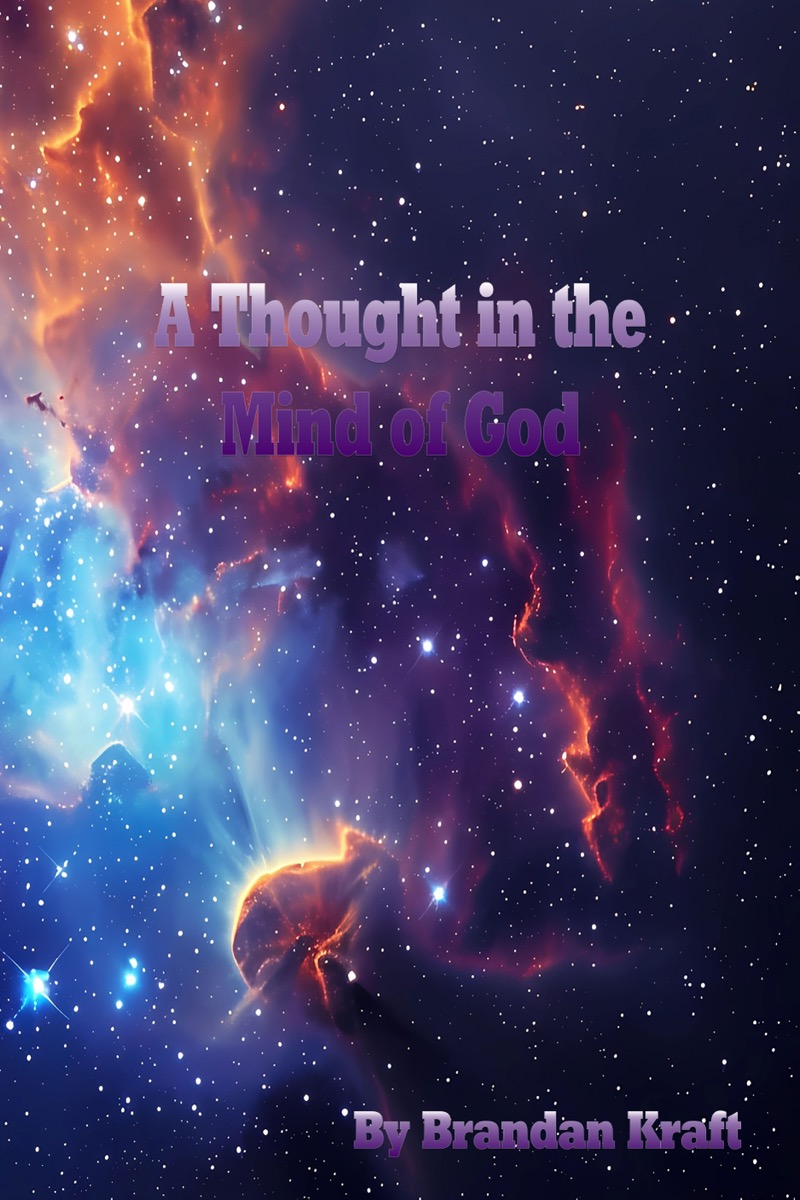
“Everything that exists is a thought in the mind of God, sustained by His will, authored by His purpose, and held together by personal covenants of love.”Read Now
Choose from multiple reading plans, track your daily progress, and receive reminders to stay on track — all with a free account.
Select a plan to begin your Bible reading journey. Your progress will be tracked automatically.
You've completed your reading plan!
Isaiah 53:10, Rom 8:28-30, Psalm 23, grace, love one another
Commentary